NexCore
NexCore
NexCore
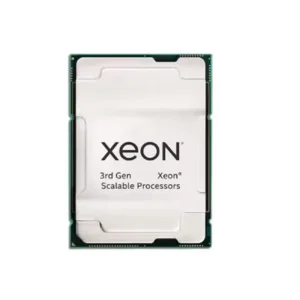
In the era of hyper-scale cloud deployments, high-performance artificial intelligence execution, and heterogeneous computing networks, the demarcation line between hardware and software has dissolved. Historically, server original equipment manufacturers (OEMs) and original design manufacturers (ODMs) focused exclusively on physical layouts—PCB design, power delivery, thermal management, and mechanical engineering. Today, maximizing the return on investment (ROI) of advanced silicon, such as Dual EPYC 9654 processors or Intel Xeon Scalable architectures, requires specialized Operating System (OS) enablement and hardware-software co-design.
NexCore Intelligent Technology Co., Ltd. stands at the forefront of this convergence. Providing bare-metal performance requires far more than loading standard, out-of-the-box operating systems. It requires tailored kernel optimizations, device drivers constructed for specific high-bandwidth topologies, and custom Board Support Packages (BSPs). This whitepaper details how we customize, optimize, and export integrated OS environments pre-loaded onto high-performance hardware, ensuring client systems are deployed instantly, run at maximum operational efficiency, and comply with diverse international regulatory standards.
Global enterprises face wildly differing compute, privacy, and operating paradigms. A cloud provider in Germany running virtualized multi-tenant nodes requires vastly different OS capabilities compared to a low-latency machine vision system deployed in a smart assembly line in Tokyo. NexCore supports diverse OS optimizations based on localized use cases:
For critical applications, we customize Enterprise Linux derivatives (Rocky Linux, AlmaLinux, and openEuler) to maximize compatibility with modern ARM, x86, and GPU architectures. This includes building custom RPM/DEB repositories, configuring tailored device trees, and embedding low-latency scheduler modifications.
In industrial automation, delays can lead to hardware failure. NexCore engineers configure RTOS-enabled kernels utilizing PREEMPT_RT patches, optimizing IRQ handling protocols and disabling unnecessary hyperthreading profiles to achieve absolute deterministic processing windows under 10 microseconds.
With the rise of systems utilizing deep learning engines like DeepSeek, we design lightweight, immutable OS distributions. These come preloaded with specific NVIDIA/AMD kernel drivers, customized CUDA runtimes, and Docker/Podman container orchestration engines for immediate plug-and-play AI training.
Operating system custom development is not static. It requires forward-looking technical architecture to ensure long-term stability and forward hardware compatibility. Below is the technical roadmap NexCore implements across our hardware portfolio to ensure maximum future-proofing.
Custom BIOS (Basic Input/Output System) tuning forms the foundation. We optimize UEFI configurations, customize default boot tables, and develop secure baseboard management controller (OpenBMC) architectures to enable granular control over power states, system monitoring, and hardware verification before the OS loads.
Modern systems require high throughput. We configure operating systems utilizing DPDK (Data Plane Development Kit) and SR-IOV (Single Root I/O Virtualization) configuration strategies. This bypasses the traditional kernel bottlenecks, sending network packets directly to user space and dramatically boosting virtualized NVMe read/write metrics.
Implementing TPM 2.0 (Trusted Platform Modules) and secure encrypted virtualization keys within the OS. This allows public sectors and financial organizations to comply with sovereignty laws, assuring that their data is protected from unauthorized root access or hypervisor-level intrusion.
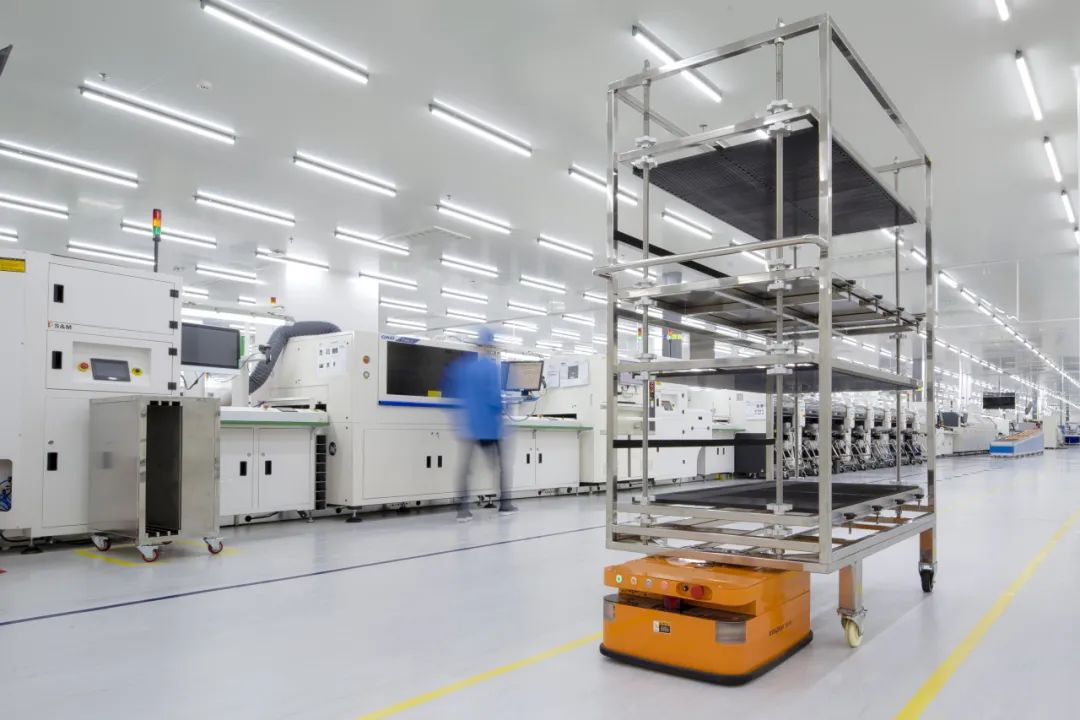
Operating in Shenzhen, the silicon heartland of China, NexCore harnesses a high-velocity electronics supply ecosystem. Our factory manages components and integration procedures with direct proximity to primary raw material providers, silicon brokers, and structural component manufacturers.
Our established partnerships with over 1,250 certified supply chain nodes allow us to guarantee component accessibility even during global chip shortages. When configuring custom operating systems, we maintain a dedicated laboratory for Hardware Compatibility List (HCL) validations, verifying that every RAM module, NIC card, and storage drive behaves predictably under simulated heat loads within the target operating system.
This level of supply-chain oversight reduces lead time for customized hardware configurations from the typical industry average of 6-8 weeks down to 15-20 days, without sacrificing rigorous quality control standards.
Exporting high-performance servers pre-installed with custom OS configurations requires deep compliance awareness. Different global markets have rigorous security, electromagnetic compatibility, and energy footprint criteria that must be satisfied.
All server chassis and OS implementations conform to CE, FCC, RoHS, and UL guidelines. We ensure that localized energy conservation parameters, such as Energy Star server profiles, are written directly into the OS energy-scheduler policies.
For European markets, our pre-installed OS configurations disable non-essential telemetry features to maintain strict GDPR compliance. Similarly, for North American clients, we deploy OS builds configured for HIPAA or SOC2 environments.
We provide remote engineering assistance, kernel debugging, and custom driver integration. Through out-of-band management platforms, our global clients receive localized support regardless of their operational time zones.
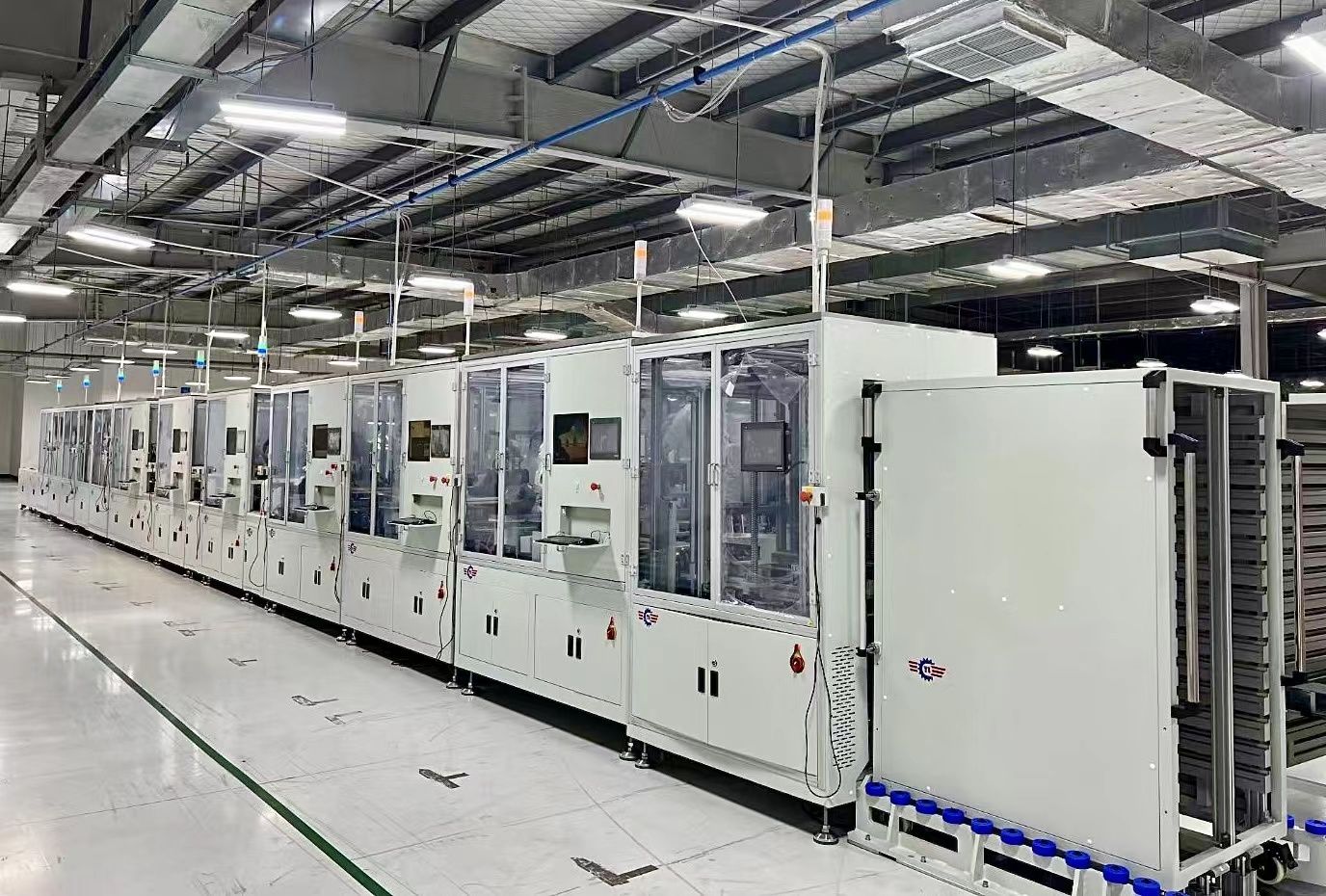
Established in 2017 and headquartered in the technological hub of Shenzhen, China, NexCore Intelligent Technology Co., Ltd. is a professional AI server manufacturer, OS integrator, and computing solution provider. Operating out of a modern facility designed for advanced assembly, we specialize in high-performance GPU servers, custom AI training clusters, inference hardware, and customized software systems.
With over 9 years of deep industry expertise and 6 years of international export operations, we have established ourselves as a dependable technological partner. We achieve an annual export revenue of roughly USD 18 million, serving clients across North America, Europe, Southeast Asia, the Middle East, and Oceania.
Our quality management department is staffed by 46 dedicated QC specialists who oversee rigorous stress testing protocols. Every server undergoes standard component inspection, system integration testing, thermal dynamics analysis, prolonged high-heat burn-in testing, and out-of-box quality auditing to guarantee structural and software integrity.
NexCore's internal engineering department comprises 128 experienced specialists in server board design, firmware architecture, low-level system code, and thermal simulations. Over the past year, our team introduced 86 specialized products and custom architectures to market, satisfying the demands of rapidly growing AI sectors.
Standard, off-the-shelf operating systems do not contain optimizations tailored to high-density PCIe topologies, specific CPU cache allocations, or multi-GPU configurations. A custom OS integration ensures that the low-level kernel, storage subsystems (like Ceph or NVMe-oF), and GPU interfaces are pre-configured to communicate with the lowest possible latency. This minimizes resource overhead, increases security, and ensures immediate deployment readiness.
Our engineering team conducts physical and virtualization-level validation using our specialized testbeds. We verify kernel module stability, check memory addressing bounds, and customize the GPU drivers inside the OS to align with specific hardware parameters. This testing process mitigates kernel panics and ensures stable memory throughput when running large AI model architectures.
Yes. As a comprehensive OEM/ODM provider, we customize the entire boot sequence. This includes burning custom client logos directly into the BIOS ROM, customizing PXE netboot screen layouts, and establishing customized operating system boot screen parameters, creating a unified brand experience from startup to application runtime.
By maintaining deep relationships across the hardware supply chain, we secure direct access to key controllers, high-speed RAM modules, and storage devices. This protects our factory from common component delays, enabling us to assemble, configure, test, and ship complete custom systems faster than competitors relying on third-party distributors.
Each server undergoes a minimum 24-to-72-hour burn-in phase inside specialized environmental test rooms heated up to 40°C. During this process, the operating system runs structural diagnostic tools that stress the CPU, system memory, storage drives, and GPU accelerators to their absolute limits, identifying potential performance bottlenecks or system anomalies prior to packaging and delivery.