NexCore
NexCore
NexCore
High-performance computational processing units, enterprise database nodes, and hyperconverged architectures ready for global deployment.
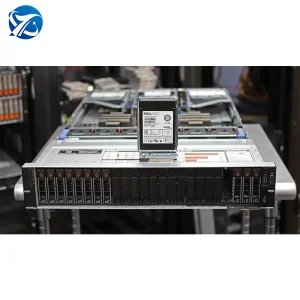
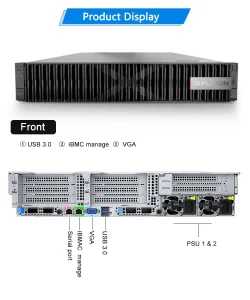
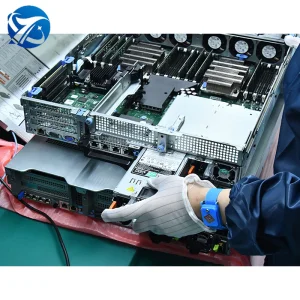
How high-concurrency systems, hybrid transactional/analytical processing (HTAP), and AI vector databases are reshaping modern silicon requirements.
In the modern digital economy, data is no longer merely an administrative record; it is the central fuel driving machine learning model inference, real-time banking transactions, and complex global supply chain logic. The paradigm of hosting databases on general-purpose computational servers is rapidly declining. Today’s software architectures—such as distributed SQL database engines, vector databases (e.g., Milvus, Pinecone, pgvector), and hybrid transactional/analytical processing (HTAP) platforms—demand hardware that has been purposely optimized for relentless data movement and compute density.
Historically, Database Administrators (DBAs) and enterprise infrastructure architects optimized SQL workloads purely by increasing CPU clock speeds. However, as dataset sizes have expanded into the petabyte range and microsecond-level query latencies become the baseline requirement, the bottleneck has shifted from raw computation to memory bandwidth, storage bus I/O throughput, and system thermal sustainability. Relational database engines run hot under high read/write cycles, causing traditional server nodes to experience thermal throttling, which degrades operational SLAs.
Traditional Relational Database Management Systems (RDBMS) like Oracle and MS SQL require extremely high clock speeds per core, fast PCIe NVMe storage lanes, and minimal disk-write latency to handle high-frequency commit records.
AI-driven semantic search pipelines utilize massive multi-dimensional vectors. Querying these models demands high GPU capabilities, immense system memory capacity, and ultra-high-density storage structures to fetch and compare vector indices instantly.
Big Data warehouses and OLAP workloads process complex analytics across billions of data rows. These query architectures rely on vast memory channels, multiple sockets, and optimized multi-thread processing paths to yield quick query outputs.
To run workloads like DeepSeek AI storage, real-time logistics tracking, or banking applications, organizations face severe hardware bottlenecks. The first is **Memory Bandwidth and Capacity**. In-memory databases (such as Redis or SAP HANA) reside completely within the RAM to eliminate storage latency. If a server system lack efficient ECC memory layout, operations stall.
The second is **Storage I/O Operations Per Second (IOPS)**. Modern workloads require fast reading of transaction logs (WAL) and index trees. Standard SSD interfaces suffer high latency under mixed read/write queries. Hardware platforms optimized with SAS 12Gb/s or NVMe Gen4/Gen5 host connections, matching architectures such as the Dell PowerEdge and xFusion server catalogs, are crucial to resolving these infrastructure performance constraints.
Shenzhen, China, has evolved from a simple assembly location into the world's most dense cluster of advanced hardware research, manufacturing, and supply chain logistics. For international IT buyers, purchasing high-density enterprise database servers from China provides unmatched economic efficiency, advanced custom engineering, and incredibly short time-to-market cycles.
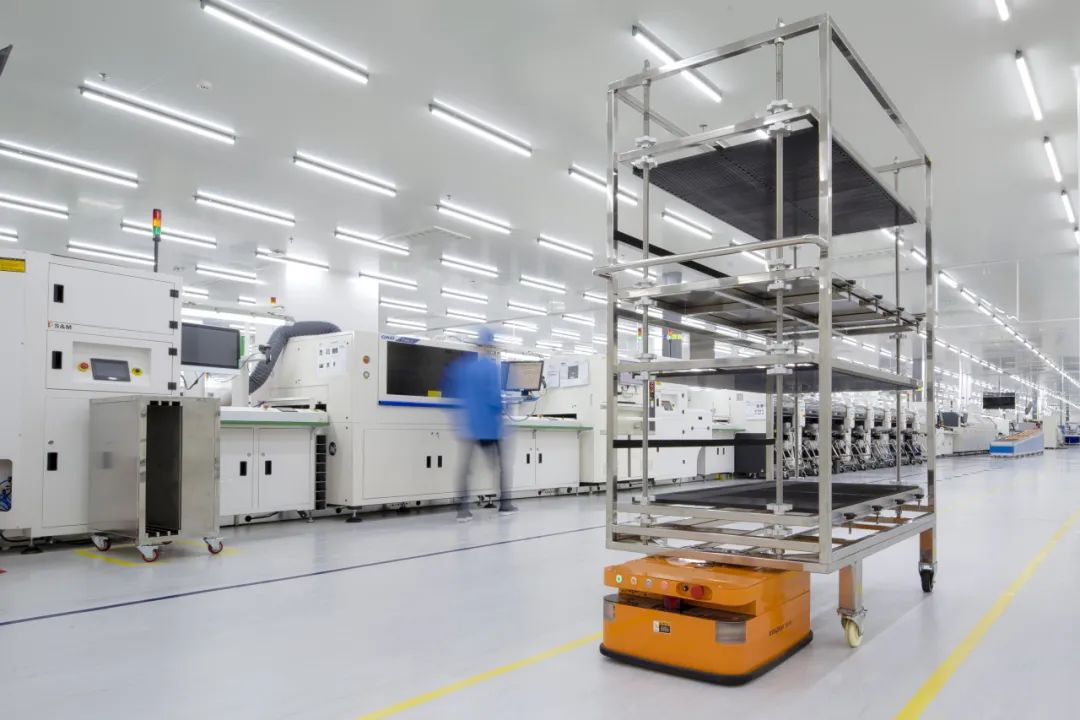
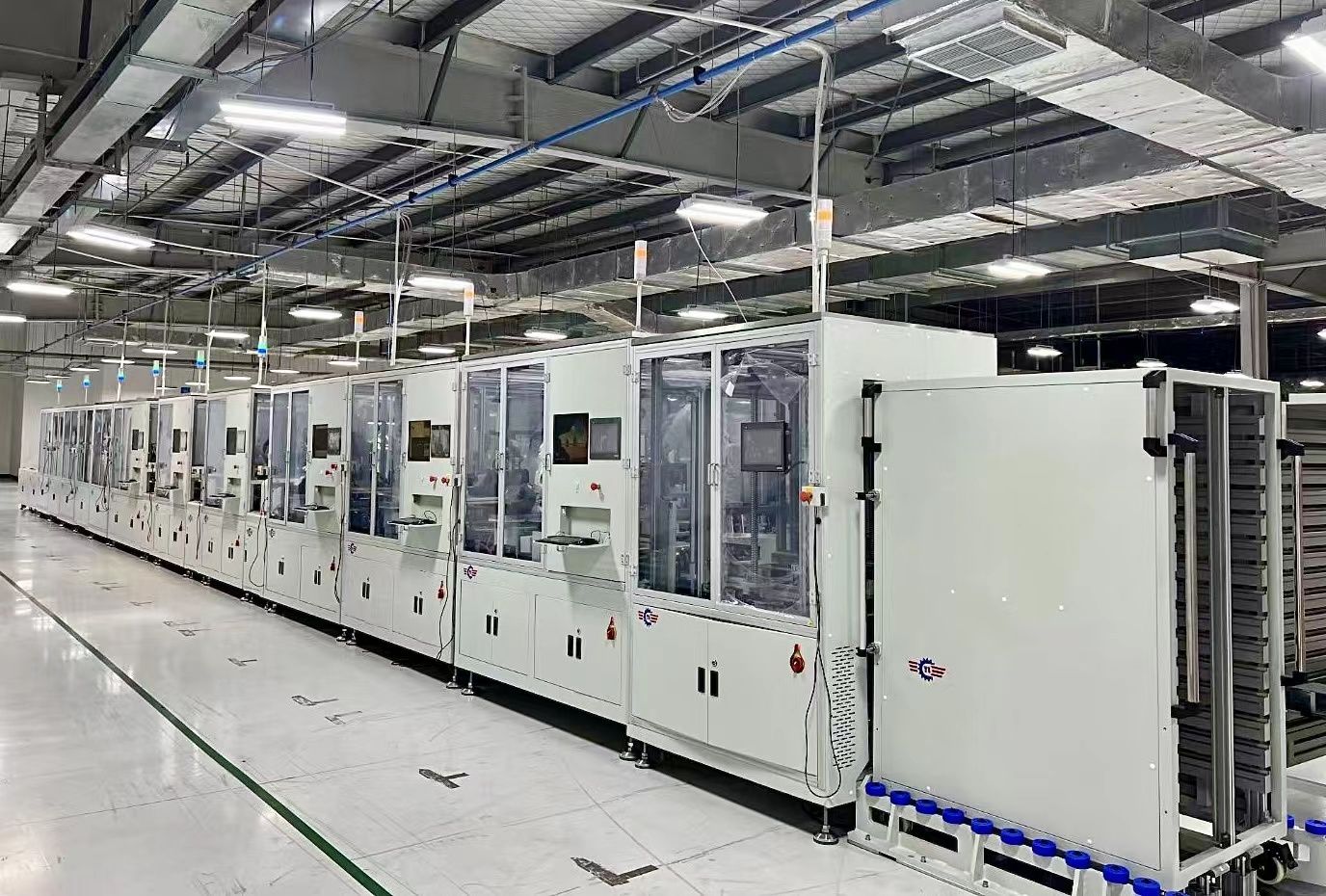
At the center of this technological hub is NexCore Intelligent Technology Co., Ltd., established in 2017. As an industry leader, NexCore operates a modern production facility in Shenzhen specialized in high-performance GPU systems, AI training nodes, HPC servers, and custom computational server architectures.
By utilizing a tight network of more than **1,250 supply chain partners**, Chinese manufacturers can source premium silicon components, memory modules, advanced PCBs, and thermal cooling components in days rather than months. This dynamic ecosystem allows NexCore to launch **86 new products and solutions within a single year**, accommodating rapid developments in AI and data processing technologies.
This supply chain agility is combined with rigorous cost optimization. In database systems, hardware is the primary capital expense (CapEx). Buying direct from a China-based manufacturer enables enterprise buyers to save 20% to 40% on hardware acquisition costs. These savings can be reinvested into software licensing, redundancy setups, or memory capacity expansion.
Every custom database server undergoes system integration audits, thermal performance checks, burn-in validation, and final data-path compliance tests managed by NexCore's 46 certified QC engineers.
Exploring targeted workloads where tailored server configurations maximize processing efficiency and eliminate hardware bottlenecks.
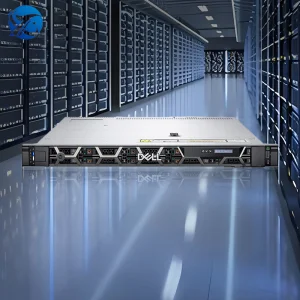
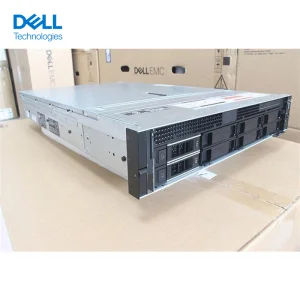
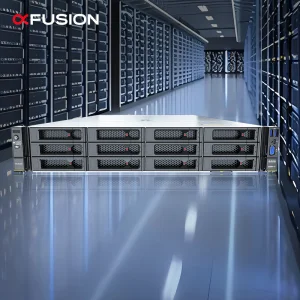
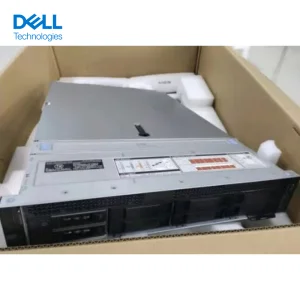
Financial applications run complex concurrency loops. Standard servers fail due to I/O bottlenecks and write delays. Employing dual-socket platforms like the **Dell R660 1U/2U** or **xFusion 1288H V7** equipped with multi-core CPUs and redundant PSUs ensures low-latency transaction processing and continuous availability.
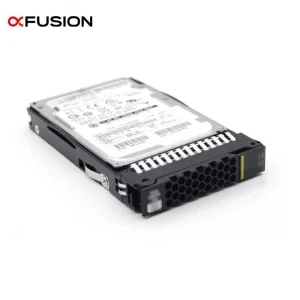
Smart factories and IoT applications generate continuous streams of sensor data. Writing these datasets demands steady storage bandwidth. Using servers equipped with SAS 12Gb/s enterprise drives like the **Universal SAS HDD Series** avoids buffer saturation and secures write stability.
Retrieval-Augmented Generation (RAG) and semantic searching rely on vector databases (such as Milvus). Processing high-dimensional vectors requires GPU-accelerated computing. Utilizing nodes like the **FusionServer G5500 V6** or **FusionServer 2288H V7 AI Data Server** speeds up nearest-neighbor search operations significantly.
Reviewing CPU architectures, thermal dissipation engineering, power management, and storage buses to prevent system bottlenecks.
Selecting a database server requires looking beyond standard technical datasheets. Enterprise workloads require high reliability and performance under stress. At NexCore, our database hardware design centers around four critical pillars:
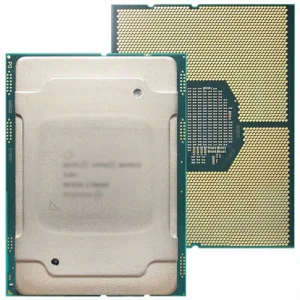
Relational databases are heavily reliant on single-thread memory latency and instruction execution speeds. CPUs like the **Intel Xeon Gold 5318H/5320H/6328H/6330H** feature large L3 caches that keep data tables close to execution units, minimizing cache misses. Furthermore, in four-socket architectures (such as the **FusionServer 2488H V6**), the CPU-to-CPU interlink speed (Ultra Path Interconnect or UPI) determines how fast database threads can communicate across different sockets.
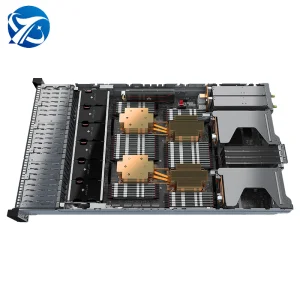
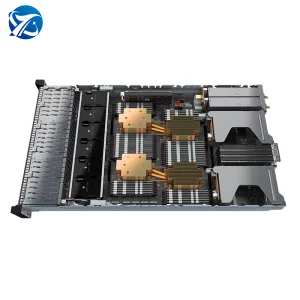
Database workloads maintain CPUs at high utilization levels for extended periods. When processor temperatures reach thermal thresholds, the system automatically lowers clock speeds, causing transaction times to spikes. NexCore resolves this by using custom 2U heat sinks, high-CFM variable fans, and optimized internal chassis layouts that direct airflow directly across active silicon components.
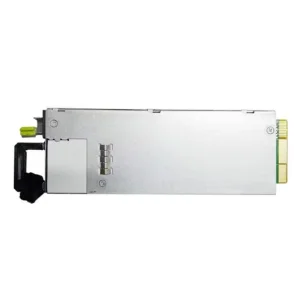
Unexpected power failures can lead to database corruption. Enterprise servers must feature redundant power supplies (PSUs) operating in load-balanced modes. Incorporating components like the **Platinum 900W/1500W/2000W AC PSUs** ensures that even under maximum system load, the power delivery remains stable, protecting transactional data from corruption.
Storage protocols like NVMe and SAS 12Gb/s dictate the physical limits of database transaction processing. While NVMe excels at handling high-throughput parallel queues, enterprise SAS drives remain essential for their long-term reliability and hot-swap compatibility. Adapting to balanced hybrid storage configurations ensures that hot data resides on fast flash modules while archival databases are safely stored on cost-effective hard drives.
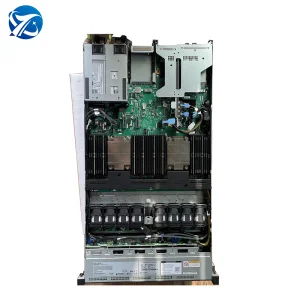
Enterprise SAS HDDs, redundant power supplies, hyperconverged servers, and multi-socket rack installations.
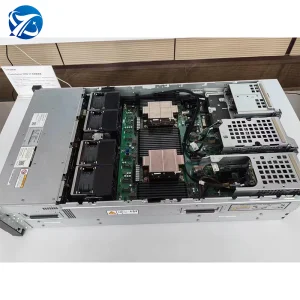
Your reliable global partner for AI computing, high-performance database servers, and custom infrastructure solutions.
Founded in **2017** in Shenzhen, China, NexCore Intelligent Technology Co., Ltd. has grown into a leading developer and manufacturer of advanced AI servers and database systems. The company operates a state-of-the-art facility optimized for hardware integration, thermal validation, and system benchmarking.
With over **9 years of industry experience** and **6 years of export operations**, NexCore has earned a reputation for quality and technical excellence. The company registers an annual export volume of approximately **USD 18 million**, serving clients across North America, Europe, Southeast Asia, the Middle East, and Oceania.
To maintain strict quality standards, NexCore employs a dedicated team of **46 quality control experts** who manage a comprehensive validation process. This includes component inspection, system integration testing, thermal efficiency evaluations, and long-term burn-in testing to ensure optimal reliability in demanding enterprise environments.
NexCore supports flexible OEM/ODM customization, allowing buyers to customize chassis configurations, processor configurations, storage designs, and networking interfaces. Backed by a team of **128 experienced engineers** specializing in server architecture, thermal dynamics, and hardware optimization, NexCore works closely with partners to build hardware optimized for machine learning, deep learning (including DeepSeek), and database workloads.
Answering common questions regarding database server selection, hardware customization, testing protocols, and international shipping.
The ideal database server configuration depends on your workload type:
• OLTP workloads (transactional): Prioritize CPUs with high single-core performance (high GHz frequencies) and large L3 cache sizes (e.g., Intel Xeon Scalable series) combined with low-latency NVMe or SAS 12Gb/s drives.
• OLAP workloads (analytical): Focus on total core density, multi-channel memory support, and high-speed networking to handle large datasets.
• Vector Databases (AI Search): Require GPU acceleration (e.g., NVIDIA HGX or PCIe accelerators) to compute complex vector math in parallel.
NexCore employs a team of 46 quality control experts who oversee a multi-stage testing process. This includes component inspection, system integration testing, thermal efficiency evaluations, and long-term burn-in testing. We partner with over 1,250 verified supply chain vendors to ensure the stability, authenticity, and long-term reliability of all system components.
Yes. Supported by a team of 128 R&D engineers, we offer comprehensive customization, including custom chassis design, specific GPU/CPU configurations, custom storage layouts, networking setups, and custom OEM branding.
Lead times vary depending on system complexity and quantity. Standard configurations are usually shipped within 7 to 15 business days, while custom OEM/ODM orders requiring custom engineering typically take 25 to 40 days.
NexCore has 6 years of export operations, delivering systems to North America, Europe, Southeast Asia, and the Middle East. We ensure all servers carry the necessary safety certifications (CE, FCC, RoHS) and prepare all export documentation to facilitate smooth customs clearance.
High-precision testing equipment, cleanrooms, and testing environments that guarantee enterprise reliability.