NexCore
NexCore
NexCore
Quantum computing represents the most significant paradigm shift in computation since the vacuum tube. Unlike classical computers that process information in bits (0s and 1s), quantum computers leverage the principles of quantum mechanics—namely superposition and entanglement—to process information in qubits. This enables them to solve complex multidimensional equations that would take classical supercomputers millennia to process.
However, an essential truth of the industry is that quantum computers do not operate in isolation. Every Quantum Processing Unit (QPU) requires a massive, high-throughput, classical computing infrastructure to control its qubits, execute error-correcting algorithms, and manage the hybrid interfaces that feed algorithms (like VQE or QAOA) into the quantum core. Enterprise servers, equipped with powerful GPUs and ultra-low latency NVMe storage, function as the essential control planes and classical coprocessors for today's quantum laboratories and commercial data centers.
Modality: Superconducting Qubits
Location: Yorktown Heights, New York, USA
IBM is a global leader in superconducting quantum computing. Their facility hosts the IBM Quantum System One and Two. With the "Heron" processor delivering high-fidelity gates, IBM focuses on scalable utility-era quantum architectures backed by robust classical mainframes and server nodes.
Modality: Superconducting Qubits (Sycamore)
Location: Santa Barbara, California, USA
Operating out of their advanced research labs, Google achieved notoriety with their claims of quantum supremacy. Their Sycamore and Willow architectures focus on quantum error correction (QEC), utilizing massive custom-engineered classical clusters to compute error rates and orchestrate hardware calibration.
Modality: Trapped-Ion (H-Series)
Location: Broomfield, Colorado, USA / London, UK
Formed by the merger of Honeywell Quantum Solutions and Cambridge Quantum, Quantinuum leverages Honeywell's precision manufacturing to build trapped-ion systems. Their H-series achieves exceptionally high 2-qubit gate fidelities, crucial for high-accuracy chemical simulations.
Modality: Trapped-Ion (Ytterbium/Barium)
Location: College Park, Maryland, USA
IonQ is a pioneer in commercializing trapped-ion quantum computers. By trapping individual atoms in electromagnetic fields, their systems achieve long coherence times. Their enterprise hardware is integrated directly into public cloud environments via robust classical control APIs.
Modality: Superconducting Qubits
Location: Berkeley, California, USA
Rigetti owns and operates "Fab-1", the industry's first dedicated sub-Kelvin quantum device foundry. By vertical integration from chip design to cloud deployment, they offer rapid prototyping and chip fabrication, leveraging classical compute infrastructure for hybrid QPU-GPU execution.
Modality: Silicon Spin Qubits (Tunnel Falls)
Location: Hillsboro, Oregon, USA
Intel utilizes its world-class transistor fabrication infrastructure to manufacture silicon spin qubits. By building on standard extreme ultraviolet (EUV) manufacturing processes, Intel aims to scale quantum processors to millions of qubits on a single wafer.
Modality: Quantum Annealing
Location: Burnaby, British Columbia, Canada
D-Wave is a pioneer in quantum annealing, designed specifically for combinatorial optimization problems. Their Advantage system is deployed in commercial settings globally, helping corporations with real-time logistics, supply chain routing, and financial modeling.
Modality: Photonic (Continuous-Variable)
Location: Toronto, Ontario, Canada
Xanadu designs and manufactures photonic quantum computers that operate at room temperature (except for the detectors). They lead PennyLane, an open-source software library for quantum machine learning and hybrid quantum-classical computing frameworks.
Modality: Silicon Photonics (Linear Optical)
Location: Palo Alto, California, USA / Australia
PsiQuantum aims to build the world's first utility-scale, fault-tolerant quantum computer containing over a million physical qubits. They partner with global semiconductor foundries to manufacture optical quantum chips using standard CMOS processes.
Modality: Superconducting Co-Design QPUs
Location: Espoo, Finland
As Europe's leading quantum hardware manufacturer, IQM builds custom quantum computers for research laboratories and supercomputing centers. They co-design application-specific hardware, working closely with classical HPC integrators to achieve real-time hybrid acceleration.
Depending on the qubit modality, the operating environment and control loop requirements vary. The following table provides a high-level comparison of the leading hardware pathways and the classical server support they require:
| Manufacturer | Qubit Technology | Operating Temp | Classical Server Requirement | Primary Limitation |
|---|---|---|---|---|
| IBM / Google | Superconducting | ~10 mK (Cryogenic) | Ultra-low latency RF control cards, GPU error decoders | Coherence time, cross-talk |
| Quantinuum / IonQ | Trapped-Ion | Room temp (Chamber) | High-throughput FPAs, digital signal processors (DSPs) | Gate speed, scalability |
| Intel | Silicon Spin | ~1 K | High-density classical ASIC control interfaces | Qubit variability in fab |
| Xanadu / PsiQuantum | Photonic | Room temp / Cryo detectors | High-speed optical switches, massive FPGA processing arrays | Photon loss, fiber routing |
| D-Wave | Superconducting Annealer | ~15 mK | High-density classical API interfaces, optimization nodes | Not universal gate model |
As the quantum paradigm emerges, the necessity for hyper-scalable classical infrastructure is more critical than ever. NexCore Intelligent Technology Co., Ltd., established in 2017 in Shenzhen, China, stands at the forefront of this computational intersection. Operating a state-of-the-art production facility, NexCore specializes in engineering high-performance GPU servers, AI training platforms, deep learning nodes, and high-performance computing (HPC) solutions that form the backbone of next-generation hybrid infrastructures.
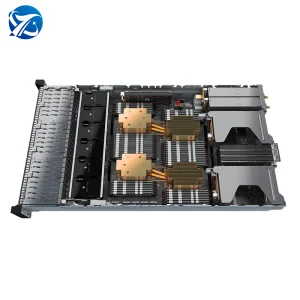
With a robust team of over 128 experienced engineers specializing in server architecture, thermal dynamics, and GPU clustering, NexCore is uniquely positioned to deliver the massive classical pipelines that quantum computing demands. These systems perform the real-time simulation of quantum circuits, execute quantum error correction (QEC) algorithms, and manage high-volume database queries crucial for hybrid enterprise models.
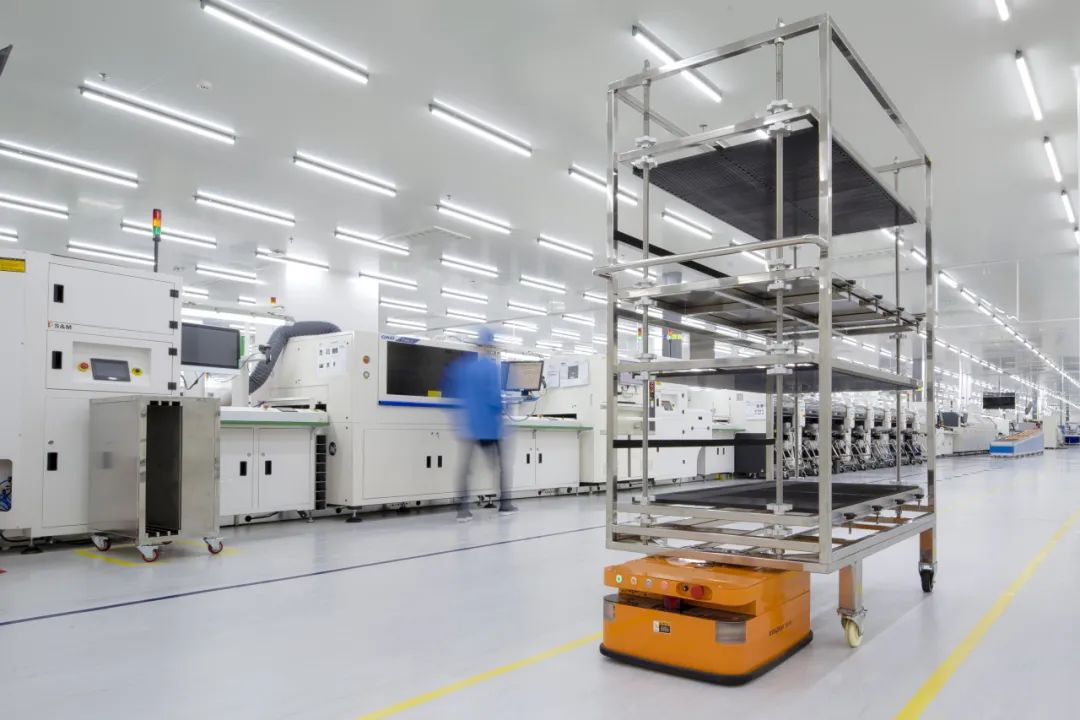
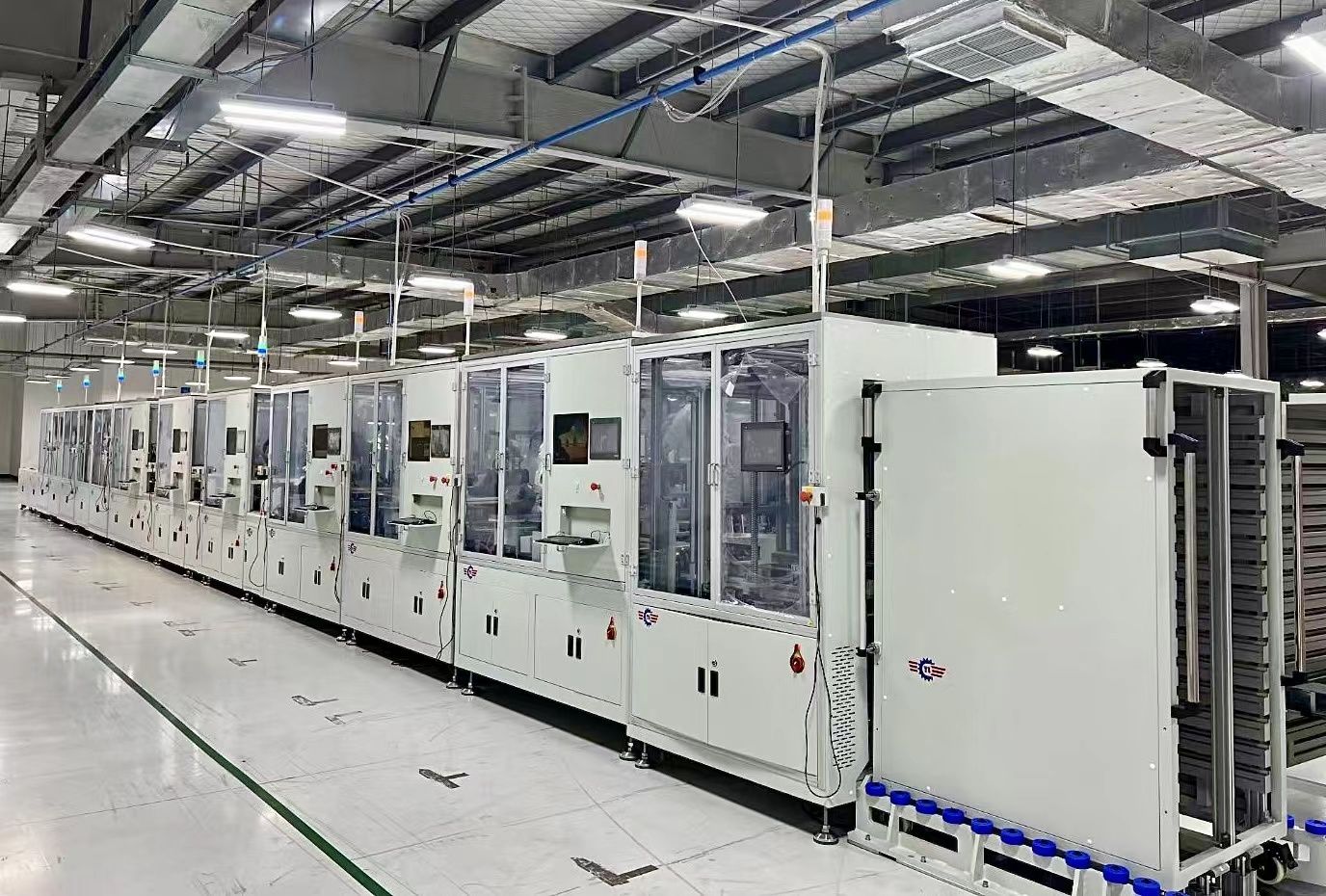
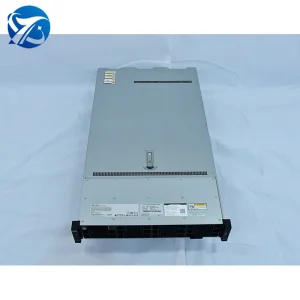
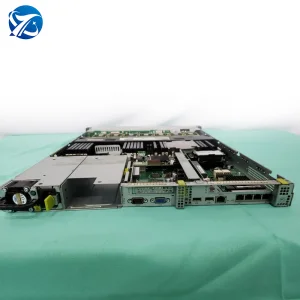
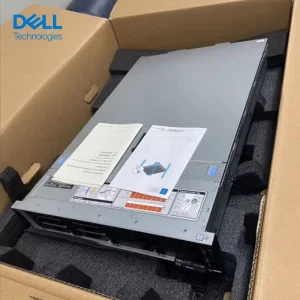
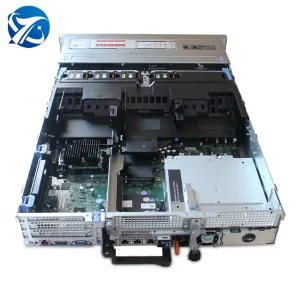
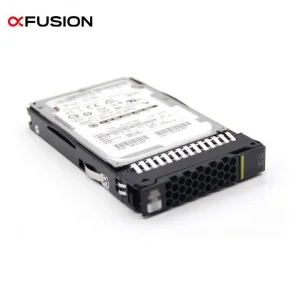
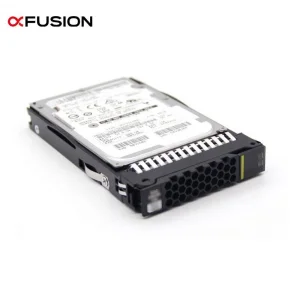
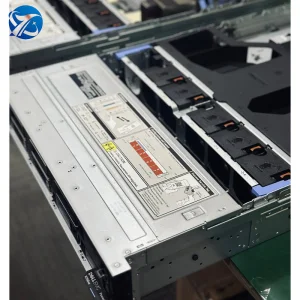
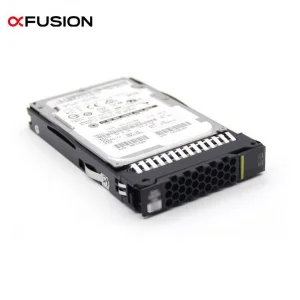
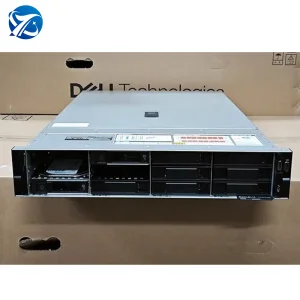
NexCore's commitment to reliability is demonstrated through its rigorous quality management system. A dedicated team of 46 quality control experts manages everything from component-level inspections to complex system integration testing. Every AI server and storage node, including the high-speed PM9A3 series NVMe SSDs and Dell PowerEdge platforms, undergoes comprehensive thermal validation, stress testing, and hardware burn-in procedures to ensure uninterrupted operation in 24/7 mission-critical workloads.
Supported by a network of over 1,250 supply chain partners, NexCore secures premium electronic components even during volatile market conditions. Serving enterprise IT clients, supercomputing laboratories, and cloud providers across North America, Europe, Southeast Asia, and the Middle East, NexCore achieves an annual export volume of approximately USD 18 million. This global reach ensures that clients receive localized compliance, scalable deployment, and direct field engineering support.
Real-world quantum deployment utilizes a method known as Variational Quantum Programming. In this configuration, the quantum processor handles only the specific calculation step that is intractable for classical processors, while the optimization, data pre-processing, and storage are executed by classical servers. This architecture benefits several industrial sectors:
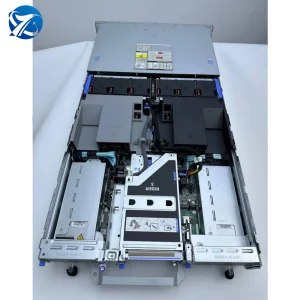
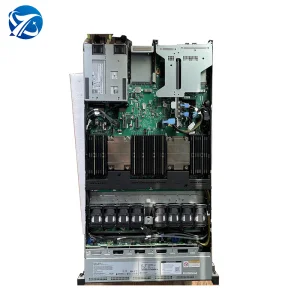
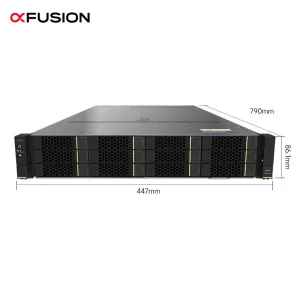
Simulating molecular structures requires calculating an exponential number of electron interactions. Quantum processors calculate molecular ground states, while high-performance GPU servers like the xFusion FusionServer 2288H V6 or Dell PowerEdge R760 run high-speed molecular dynamics simulations, processing massive data pipelines fed by intensive storage like the PM893/PM897 series SATA SSDs.
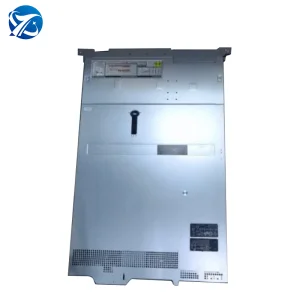
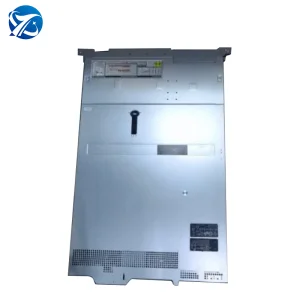
With NIST standards trending toward post-quantum cryptography (PQC), financial networks must execute decryption-resistant algorithms. This transition requires high-core-count, secure servers (such as the xFusion 1288H V7) to handle real-time encryption wrappers alongside quantum-based portfolio optimization calculations.
Global shipping routes contain billions of variables. Quantum annealers calculate optimized distribution matrices, which are then parsed and translated into actionable scheduling databases hosted on high-reliability NAS platforms, such as the 1288H V6 Nas Storage Server, providing fast access to field-deployed logistical applications.
The roadmap to true Fault-Tolerant Quantum Computing (FTQC) requires bridging the gap between physical qubits (which are noisy and prone to decoherence) and logical qubits (which are error-corrected). To achieve error correction, thousands of physical qubits must be grouped into a single logical qubit, demanding massive parallel data streams. Here is how classical hardware manufacturers are aligning their capabilities to support this quantum scaling timeline:
No, QPUs are accelerators designed for specific types of math, such as prime factorization, complex optimization, and molecular simulation. For standard computing tasks, databases, and general artificial intelligence training, classical servers containing high-end CPUs (like the Intel Xeon 6th Generation in the R670) and GPUs will remain the optimal choice, functioning alongside QPUs in hybrid topologies.
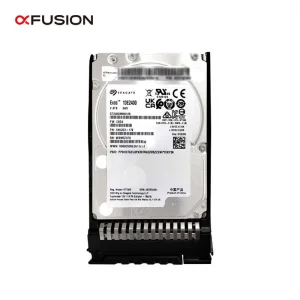
Quantum execution generates high-density telemetry data from monitoring lasers, magnetic traps, and microwave pulses. This information must be logged at high speeds for hardware calibration and error correction. High-write-endurance SSDs, such as the PM897 or PM9A3 series, provide the low latency and data durability required to prevent data bottlenecks.
NexCore manufactures customized high-density server configurations, such as GPU rack servers and custom storage architectures. Our engineering team designs specific chassis, thermal management solutions, and low-latency networking arrays that enable universities and research institutions to interface classical clusters directly with quantum cryostats.
Superconducting quantum computing (used by IBM and Google) relies on microfabricated circuits on silicon, offering fast gate speeds but requiring temperatures near absolute zero (-273°C). Trapped-ion technology (used by Quantinuum and IonQ) uses suspended atomic ions held by lasers, providing higher gate fidelity and longer coherence times, but generally at slower gate operation speeds.