NexCore
Executive Summary: The Era of Sovereign AI & High-Density Domestic Graphics
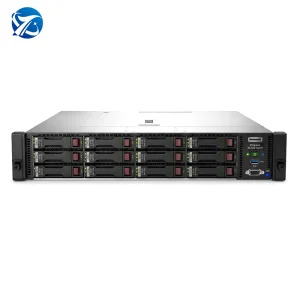
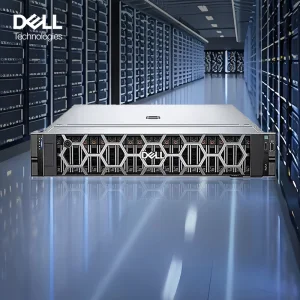
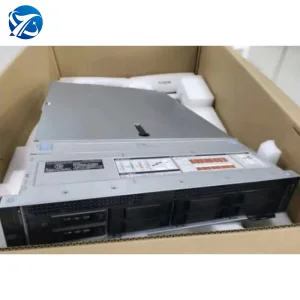
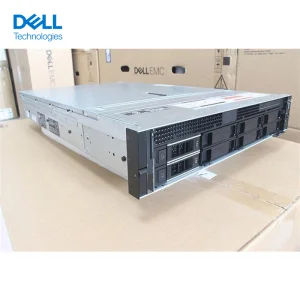
The global computing landscape is undergoing a structural transformation. With artificial intelligence models growing exponentially in size—witnessed by the rapid adoption of massive, highly dense parameters architectures like the DeepSeek-R1 671B—traditional infrastructure paradigms are failing to meet power, thermal, and density metrics. As a premier China domestic graphics exporter, NexCore Intelligent Technology Co., Ltd. is addressing this tectonic shift by designing and exporting next-generation hardware frameworks optimized for modern workloads.
In this industrial whitepaper, we dissect the state of domestic graphics integration, analyze the critical engineering dynamics driving modern hardware development, and present optimized methodologies for system integrators, datacenters, and cloud service providers globally.
1. The Global Landscape of Domestic Graphics and Server Architectures
Geopolitical developments, regional digital sovereignty regulations, and supply-chain constraints have spurred the necessity for autonomous computing architectures. Over the past decade, Chinese semiconductor developers and graphics designers have engineered alternative accelerated processing units (GPUs) capable of handling massive parallel compute workloads. These domestic graphics processors are no longer isolated test concepts; they are actively driving high-density training clusters and high-concurrency inference tasks.
The international market is demanding flexible, hardware-agnostic system platforms that can easily integrate diverse accelerator form factors, whether based on traditional PCIe configurations, high-speed proprietary interconnects, or advanced open standards. As an agile hardware developer, NexCore builds the bridge between advanced domestic graphics architectures and the global IT enterprise ecosystem, allowing seamlessly hybrid deployments.
2. Core Hardware Trends: High Density, PCIe 5.0, and Liquid Cooling
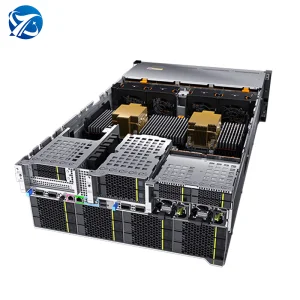
The performance of a domestic graphics node depends heavily on the interface bandwidth and thermal dissipation efficiency of the chassis platform. NexCore servers incorporate next-generation PCIe Gen 5 configurations, enabling data transfer rates up to 32 GT/s per lane. This ensures that GPU clusters can process large dataset arrays without encountering traditional communication bottlenecks.
However, high compute density inevitably translates to extreme heat production. Modern GPU and high-performance server architectures are quickly outgrowing the physical capabilities of forced air cooling systems. The industry is rapidly pivoting toward direct-to-chip liquid cooling systems. By circulating low-thermal-resistance coolant directly across hot server components, liquid-cooled solutions reduce Power Usage Effectiveness (PUE) ratios down to 1.15, meeting stringent global data center energy regulations.
| Metric Parameter | Air-Cooled Systems (Standard) | Direct-to-Chip Liquid Cooling | Key Advantages |
|---|---|---|---|
| Compute Density | Up to 4-6 GPUs / 2U Node | 8-10 GPUs / 2U Node (High Density) | Saves physical server rack footprint |
| Power Usage Effectiveness (PUE) | 1.35 - 1.50 | 1.10 - 1.20 | Saves operational overhead (Opex) |
| Thermal Resistance | Higher (Requires high-RPM fans) | Extremely low (Optimal heat transfer) | Extends hardware lifespan |
| Acoustic Footprint | High noise pollution (fans) | Minimal noise footprint | Improves local operating environment |
3. Localized Applications: Custom Workloads & DeepSeek Optimization
The emergence of sophisticated models, particularly the open-source DeepSeek R1 671B architecture, has democratized advanced reasoning capabilities. However, running inference or fine-tuning models of this scale requires vast memory bandwidth and optimized cluster communication layers. NexCore's newest server models feature tailored memory controllers, supporting massive DDR5 system RAM alongside high-bandwidth graphics memories to manage parameter weight routing effectively.
In local scenarios, such as smart city video analysis, public transit management, and municipal safety surveillance, our GPU hardware serves as the backend engine. Real-time video processing requires high concurrency and ultra-low latency, tasks that can be fully optimized utilizing domestic graphics engines when combined with modern containerization layers (Kubernetes, Docker) that we natively integrate into our system builds.
4. Technical Roadmap & Future Outlook (2025-2030)
Over the next five years, the integration of domestic graphics components will focus on open-source consortium standards. We anticipate:
- PCIe Gen 6 Adoption: Doubling current throughput capabilities to address the demands of multi-trillion parameter neural networks.
- Chiplet Architecture Standardisation: Lowering production cost thresholds and simplifying custom SoC creation for industrial deployments.
- Smarter Edge Node Deployments: Migrating GPU servers closer to edge data hubs to minimize WAN transport latency.
- Universal Liquid-Cooling Manifolds: Standardizing quick-disconnect couplings to allow easy multi-vendor rack system retrofitting.
5. Strategic Macro Solutions for Global Data Centers
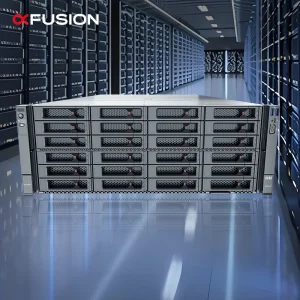
At a macro level, NexCore provides end-to-end data center solutions tailored to international engineering specifications. Our offerings are not limited to selling server chassis; they include thermal planning, power distribution management, and orchestration design.
Our global client base in North America, Europe, and Southeast Asia relies on NexCore to deliver turnkey GPU clusters that arrive pre-configured and ready for containerized orchestration. This significantly reduces customer time-to-market and local integration costs, ensuring that software engineers can begin training models almost immediately after unit installation.